Wednesday, January 1, 2025

Legacy of Valor and Vision: Remembering Captain Bhanu Pratap Singh and Our Freedom Fighters

 🎉 Celebrating Shruti Nagvanshi's Birthday - January 2nd! 🎂


On this special day, I want to express my gratitude to my life partner, Shruti Nagvanshi, whose wisdom and guidance have been a guiding light in our journey. On her advice, I wrote an article that honors the legacy of Captain Bhanu Pratap Singh and the freedom fighters who shaped our history. Their sacrifices and values continue to inspire us every day.

Check out the article "Legacy of Valor and Vision: Remembering Captain Bhanu Pratap Singh and Our Freedom Fighters" written by me:

Let us remember and honor the indomitable spirit of our heroes, whose courage and dedication laid the foundation for the society we live in today. May their legacy continue to inspire generations to come. 🌟

#LegacyOfValor #FreedomFighters #Patriotism #Justice #HumanRights #Inspiration #ShrutiNagvanshi #CaptainBhanuPratapSingh #Family #HonoringSacrifice #Courage

Legacy of Valor and Vision: Remembering Captain Bhanu Pratap Singh and Our Freedom Fighters

Captain Shri Bhanu Pratap Singh

On January 1, 2025, we gathered to observe the Teraahi ceremony of Captain Bhanu Pratap Singh, my beloved granduncle, who passed away on December 20, 2024. Born on October 15, 1937, Captain Bhanu Pratap Singh was a beacon of discipline, patriotism, and service. His life’s journey inspires us not only to honor his contributions but also to reflect on the enduring legacy of our family and village in India’s fight for freedom.

Captain Bhanu Pratap Singh: A Soldier’s Journey

Captain Bhanu Pratap Singh began his career in the Indian Army as a soldier and rose to the rank of Captain, serving the nation during some of its most defining conflicts:

  • The India-China War of 1962, where he displayed exceptional courage.
  • The India-Pakistan Wars of 1965 and 1971, contributing to the nation’s defense with valor.

After decades of service, he retired in 1987, leaving behind a legacy of leadership and dedication. His life epitomized the values of hard work and patriotism, which continue to inspire our family.

A Journey of Tribute

Accompanied by my wife, Shruti Nagvanshi, my sister-in-law, Savita Singh, and our family friend, Deepak Pandey, we embarked on a journey to honor his memory.

Our first stop was at the Nepali Mata Mandir in Chhitauni, followed by a visit to our ancestral village, Dhaurahara. This pilgrimage was both a personal and collective homage, revisiting places that embody the spirit of our family’s sacrifices and service.

The memorial gate commemorating my grandfather, Shri Shanti Kumar Singh, a Gandhian freedom fighter

After visiting the Nepali Mata Temple, we proceeded to our village, Dhaurahara, where we saw a gate dedicated to my grandfather, Shri Shanti Kumar Singh, commemorating his invaluable contributions as a Gandhian and freedom fighter. We then visited the Kali Temple in our village, followed by the Ram Janaki Temple in Kuti, Dhaurahara.

Shruti and I also paid our respects to my uncle, Shri Ramawtar Singh, who laid down his life as a martyr during the war with Pakistan in 1971. It is deeply moving to reflect that I was born in 1970, just a year before his supreme sacrifice.

Honoring a hero: Paying tribute to my uncle, Shri Ramawtar Singh, who made the ultimate sacrifice during the 1971 war

Our village has a proud and tragic history, having played a significant role in the first organized nationwide freedom struggle of 1857. During this period, many villagers were executed by the British colonial state, including three members of my own family, who gave their lives for India’s independence.

The Freedom Fighters of Dhaurahara

Dhaurahara is more than a village; it is a testament to India’s freedom struggle. During the First War of Independence in 1857, many villagers, including three members of my family, were executed by the British colonial state. Their bravery in looting British steamers carrying arms and ammunition and resisting colonial oppression left an indelible mark on history.

Shri Markandey Singh, a legend

Among the heroes of our village is Shri Markandey Singh, Advocate and freedom fighter, who was my grandfather’s uncle. He endured the longest imprisonment in Banaras for his unwavering commitment to India’s independence. His passing on September 17, 1990, left an irreplaceable void in our lives, but his legacy of courage and sacrifice continues to inspire and guide me in my work for justice and dignity.

Shri Markandey Singh was a revered freedom fighter, known for his remarkable endurance during the longest imprisonment in Banaras for the cause of India’s independence. When he passed away on September 17, 1990, it created a profound emptiness in our lives. Just four years later, I embarked on my journey as a full-time social worker, driven by the pursuit of freedom and dignity for society’s most marginalized. His enduring values, courage, sacrifice, and determination remain an ever-present source of inspiration for me.

He was the epitome of unwavering resolve and indomitable courage, yet it was the harshness of prolonged imprisonment that ultimately ended his struggles. Still, we honor him for his unparalleled service, which he rendered selflessly, without seeking recognition or fame. Though adversity may have shattered many of his personal dreams, his legacy is untouchable, etched in our hearts forever.

His passing was not just a personal loss to our family but to all who looked up to him as a pillar of strength and inspiration. His beloved wife, a remarkable freedom fighter in her own right, stood steadfastly by his side, contributing immensely to the fight for India’s freedom. Together, they left behind a legacy of dedication, selflessness, and profound service to the nation.

A Complex Relationship: My Father and Grandfather

My grandfather, Shri Shanti Kumar Singh, was a staunch Gandhian who believed in grassroots politics and the power of local communities to drive national change. His philosophy, “Local is universal,” resonates deeply with me. He resigned from his government job in 1941 to protest British demands for donations to fund World War II, enduring imprisonment and physical punishment for his beliefs.

A powerful testament to my grandfather, Shri Shanti Kumar Singh’s unwavering conviction — his handwritten resignation letter from 1941, a bold stand against British injustice during World War II

I spent my childhood from the age of nine months to seven years with my grandparents in Mumbai and later in my village. Afterward, I moved to my parents’ house in Daulatpur, Varanasi, where I experienced the stark ideological divide between my father, a committed communist, and my grandfather, a staunch Gandhian. My father, a strong supporter of Stalin and Mao, advocated for violent movements, while my grandfather and I believed in non-violence, secularism, and a caste-less society. This ideological clash created much conflict, particularly since I was deeply influenced by my grandparents’ values and was named by my father.

In 1985, after graduating from high school with first-class honors and distinctions in two subjects — Mathematics and Biology — I was expelled from my father’s house. I then pursued my Intermediate education in my village, followed by six months of B.Sc. at UP Degree College and one semester in B.Sc. (Agriculture) at BHU. Later, I completed my degree as Bachelor in Ayurveda, Modern Medicine, and Surgery (BAMS) and a Shastri in Sanskrit from the State Ayurvedic Medical College, Gurukul Kangari, Haridwar

My grandfather, Shri Bhanu Pratap Singh, was a remarkable and disciplined individual who instilled in me the values of hard work, courage, and patriotism. I grew up listening to his stories of involvement in the nation’s struggles, and I am deeply proud to be part of this family. My success is a reflection of my collective family’s spirit, and I miss him profoundly.

In contrast, my father, Shri Surendra Nath Singh, followed a different ideological path. As a dedicated communist, his worldview often conflicted with my grandfather’s Gandhian principles, which created a strained relationship between them. Despite these differences, both were unwavering in their commitment to social change.

For me, the contrasting ideologies presented both a challenge and an opportunity for growth. While my father’s perspectives shaped my understanding of societal structures, it was my grandfather’s vision of peace and social justice that ultimately guided my life’s work.

The leading Hindi newspaper, Amar Ujala, published the views of my grandmother

Lessons from My Grandmother

My grandmother, Yashoda Devi, was a remarkable woman who embodied dignity and spirituality. At the age of 105, she remained active and self-reliant, continuing to inspire our family with her wisdom and grace. She was not only a mentor to me but also a symbol of resilience and kindness.

Her influence, combined with my grandfather’s values, taught me the importance of grassroots action, honesty, and the strength of community.

Carrying Forward the Legacy

Captain Bhanu Pratap Singh’s life reminds us of the sacrifices made by soldiers to defend our nation’s sovereignty. His discipline and patriotism are part of a larger tapestry of our family’s legacy, interwoven with the struggles of freedom fighters like Shri Ramawtar Singh, who was martyred in the 1971 war with Pakistan, and the countless others from our village who gave their lives for independence.

As a human rights defender and co-founder of PVCHR, I strive to carry forward these values. My life partner, Shruti Nagvanshi, and I are committed to the ideals of justice, equality, and dignity, building on the foundation laid by my ancestors.

A Personal Reflection

The Teraahi ceremony of Captain Bhanu Pratap Singh was not merely a ritual; it was a moment to reflect on the shared legacy of service and sacrifice that binds our family. His life, along with the lives of our freedom fighters, inspires us to continue the struggle for a just and equitable society.

Carrying the Torch of Legacy: Honoring Sacrifice and Upholding Justice

In the footsteps of Captain Bhanu Pratap Singh and the heroes of Dhaurahara, we find not just a legacy, but a profound responsibility to uphold the values they fought for. Their sacrifices stand as a beacon of courage, resilience, and unwavering commitment to the ideals of justice and equality. As we honor their memory, we must remember that the true essence of their legacy lies not just in commemorating the past, but in our continued efforts to build a world rooted in compassion, fairness, and humanity. Their sacrifices are the foundation upon which we must stand to create a future where dignity, peace, and justice prevail. May their spirit guide us, inspire us, and never be forgotten by the generations to come.

Saturday, December 28, 2024

Strengthening Indo-Nepal Collaboration Through Ayurveda: A Journey with Dr. Arjun Karki


 🌏 Strengthening Indo-Nepal Collaboration Through Ayurveda 🌿


I had the honor of hosting Dr. Arjun Karki, former Nepalese Ambassador to the US and President of Nepal’s Central Ayurveda University, during his visit to Varanasi. Together, we explored Ayurveda’s transformative potential as a bridge between nations, connecting cultural heritage and modern innovation.

This journey reaffirmed the power of perseverance, shared values, and collective action in creating a more inclusive and sustainable future. Let’s continue working toward stronger Indo-Nepal ties and global harmony through Ayurveda!


#CulturalDiplomacy #AyurvedaForHarmony #IndoNepalRelations #SharedValues #Sustainability

Monday, December 23, 2024

“हम, भारत के (खारिज) लोग” : चावकी फ्रेण की कला और जनतंत्र पर पूंजी के ग्रहण की छवियां

 https://junputh.com/column/chawky-frenn-in-benares-and-the-indian-context-of-his-paintings/

“हम, भारत के (खारिज) लोग” : चावकी फ्रेण की कला और जनतंत्र पर पूंजी के ग्रहण की छवियां


आज के सामाजिक और राजनीतिक परिदृश्य में हो रहे परिवर्तनों ने एक गंभीर प्रश्न खड़ा कर दिया है: क्या सत्ता का उपयोग समाज की बेहतरी के लिए हो रहा है, या यह केवल सत्ता-संचालन और नियंत्रण का माध्यम बनकर रह गई है?

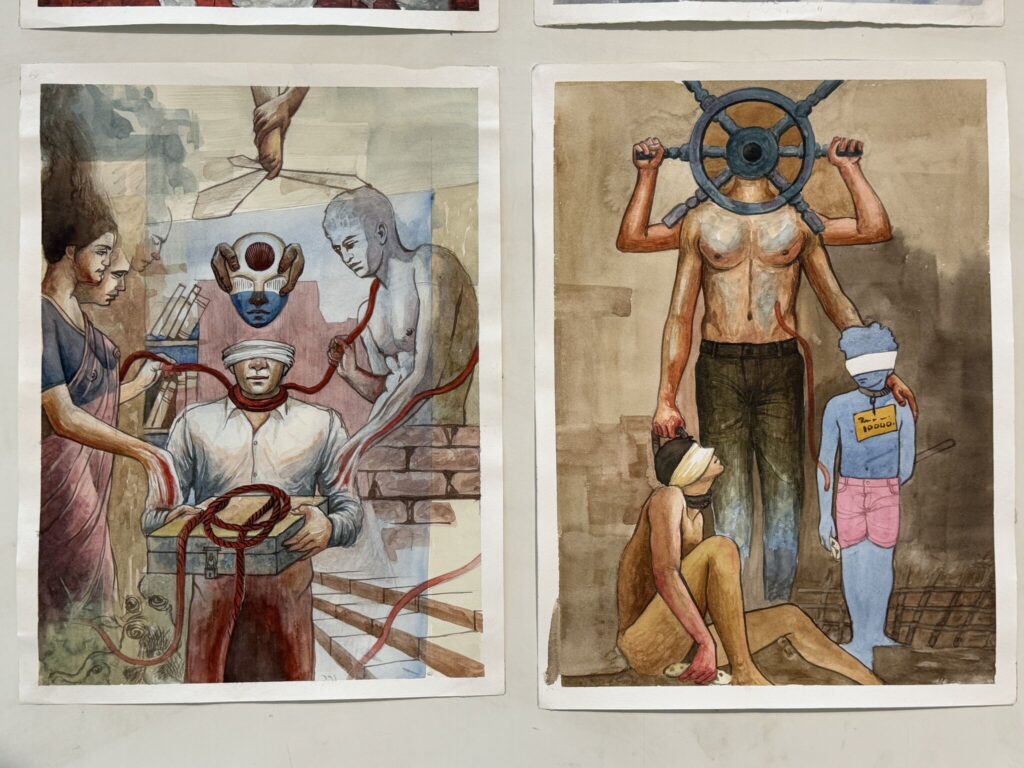
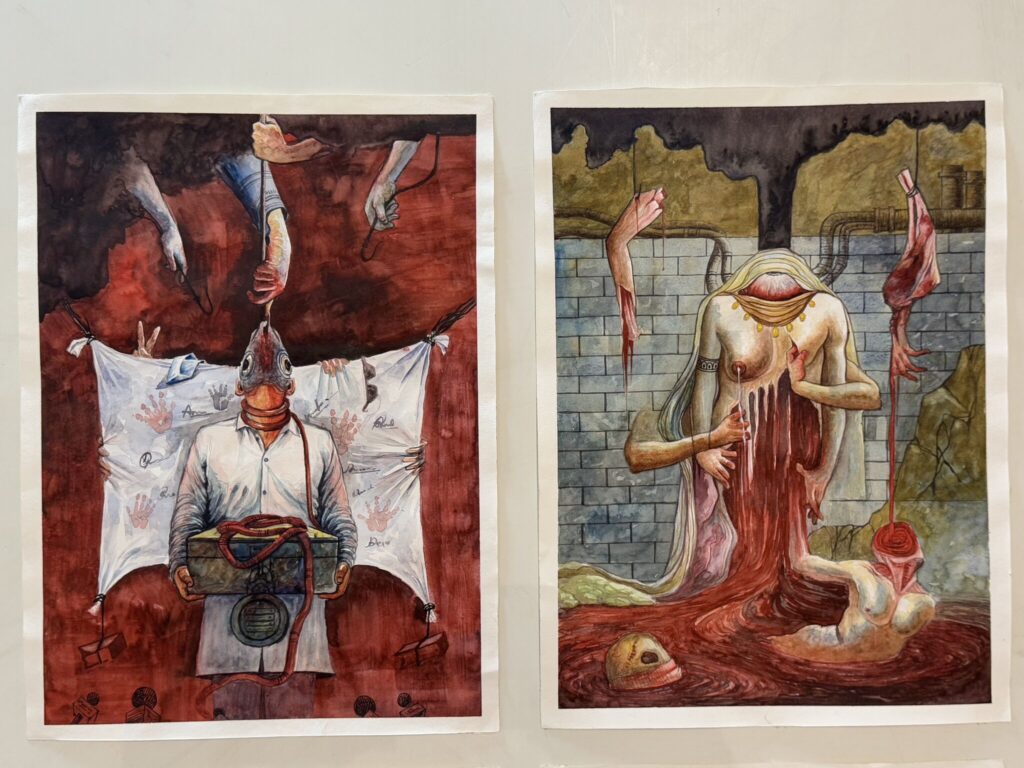
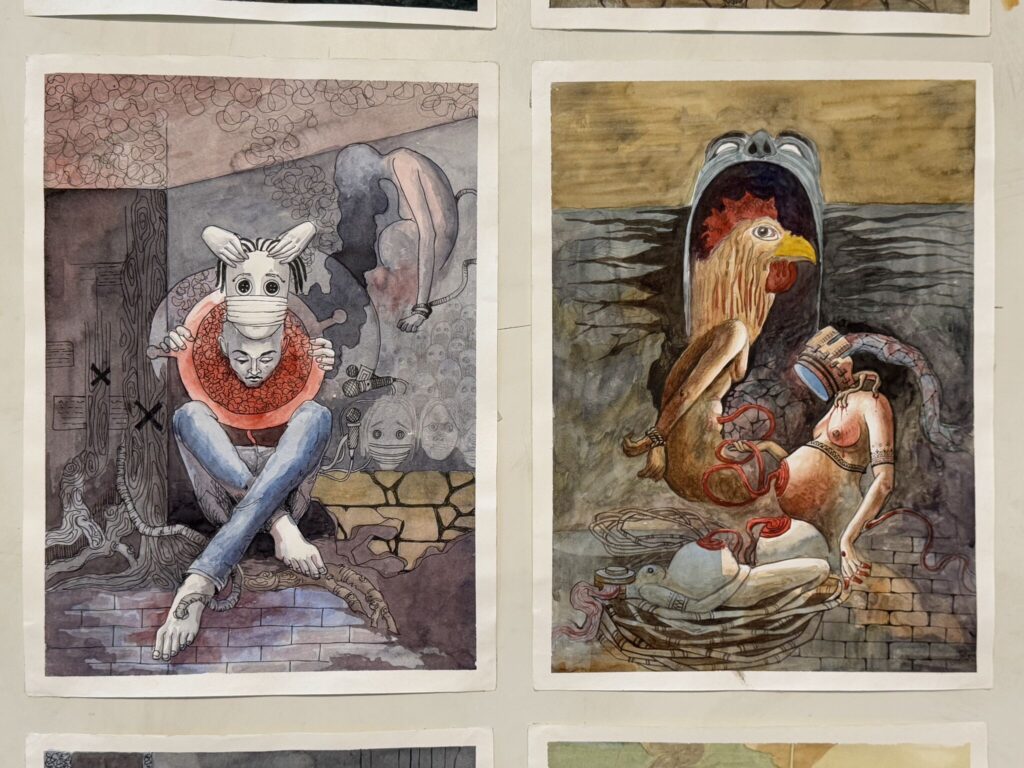
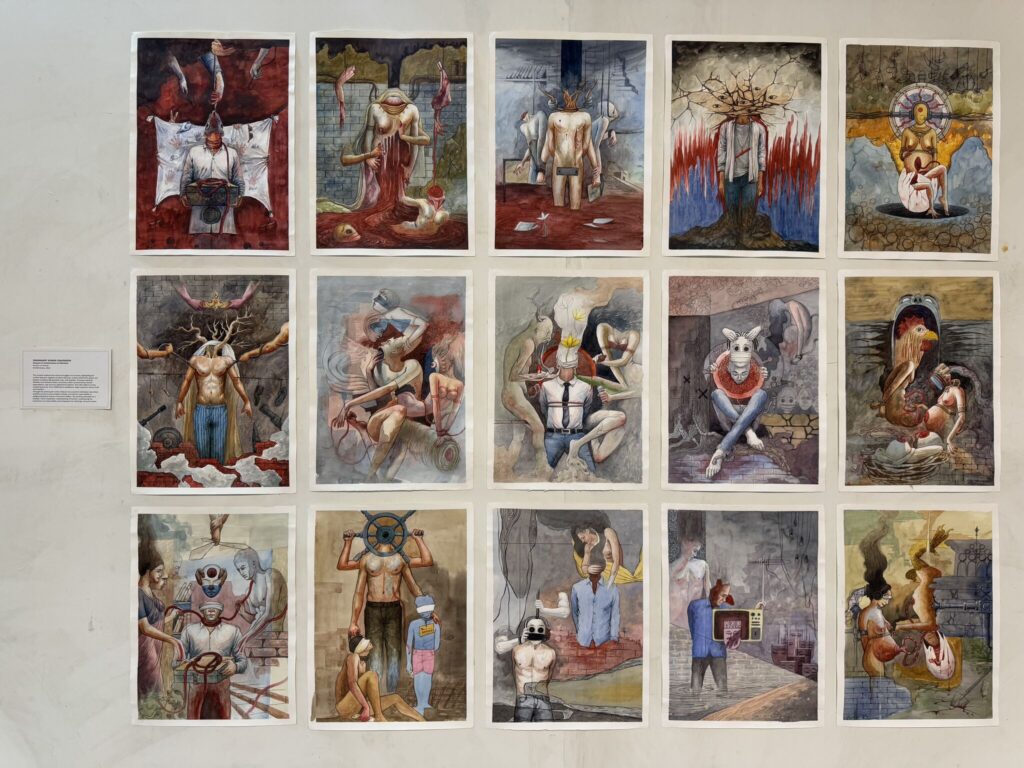
इसी संदर्भ में, चावकी फ्रेण की प्रदर्शनी “We the (Discarded) People: Welfare or Warfare?” इस मुद्दे पर गहराई और तीव्रता से प्रकाश डालती है। यह प्रदर्शनी केवल कला का प्रदर्शन नहीं, बल्कि समाज और मानव अधिकारों के प्रति जागरूकता फैलाने का एक सशक्त प्रयास है।


लेबनानी-अमेरिकी कलाकार और फुलब्राइट विद्वान चावकी फ्रेण अपने कला कार्यों में सामाजिक और राजनीतिक अन्याय को उजागर करते हैं। उनकी प्रदर्शनी तीन मुख्य विषयों में विभाजित है, जो उनके जीवन और विचारधारा का प्रतिबिंब हैं:

1. लोकतंत्र और पूंजी का प्रभाव

यह खंड इस बात की ओर इशारा करता है कि कैसे बड़े कॉर्पोरेट और पूंजीवादी ताकतें लोकतंत्र की मूल अवधारणाओं को तोड़-मरोड़ कर प्रस्तुत करती हैं। फ्रेण के अनुसार, “जनता का, जनता के लिए, और जनता द्वारा” का सिद्धांत अब “पूंजी का, पूंजी के लिए, और पूंजी द्वारा” में बदल गया है। उनके चित्र दिखाते हैं कि नीतियां और फैसले केवल कॉर्पोरेट हितों के लिए लिए जाते हैं।


2. युद्ध और सत्य का दमन

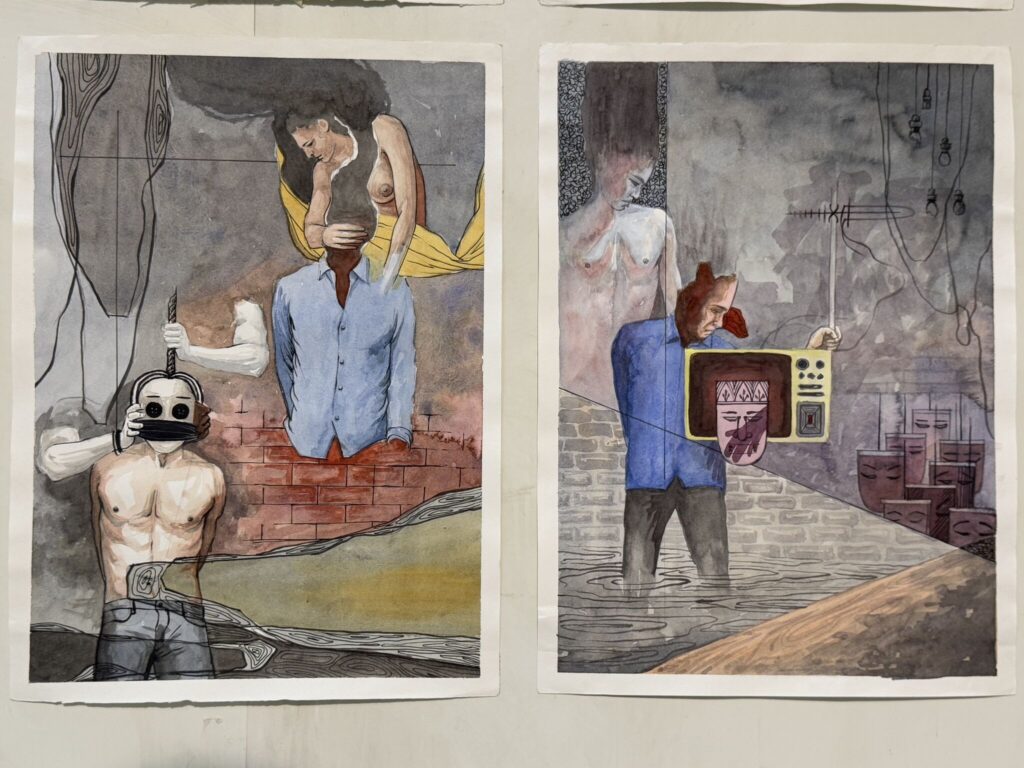
फ्रेण के चित्र यह उजागर करते हैं कि युद्ध अब केवल राजनीतिक हथियार नहीं, बल्कि आर्थिक फायदे का माध्यम बन गए हैं। तकनीकी उपकरण, गहरी फेक (deepfake) और गलत सूचनाओं के माध्यम से सच्चाई को तोड़-मरोड़ कर प्रस्तुत किया जाता है। उनका मानना है कि युद्ध के कारण न केवल लाखों लोग विस्थापित हो जाते हैं, बल्कि यह समाज के ताने-बाने को भी कमजोर कर देता है।


3. मानव अधिकारों के लिए संघर्ष

यह खंड विस्थापितों, प्रवासियों और उन लोगों की कहानियों को प्रस्तुत करता है, जिन्हें समाज द्वारा नजरअंदाज किया गया है। फ्रेण की कला उन हाशिये पर खड़े समुदायों की आवाज को मुख्यधारा में लाने का प्रयास करती है, जिनके अधिकार और पहचान छीन ली गई हैं।


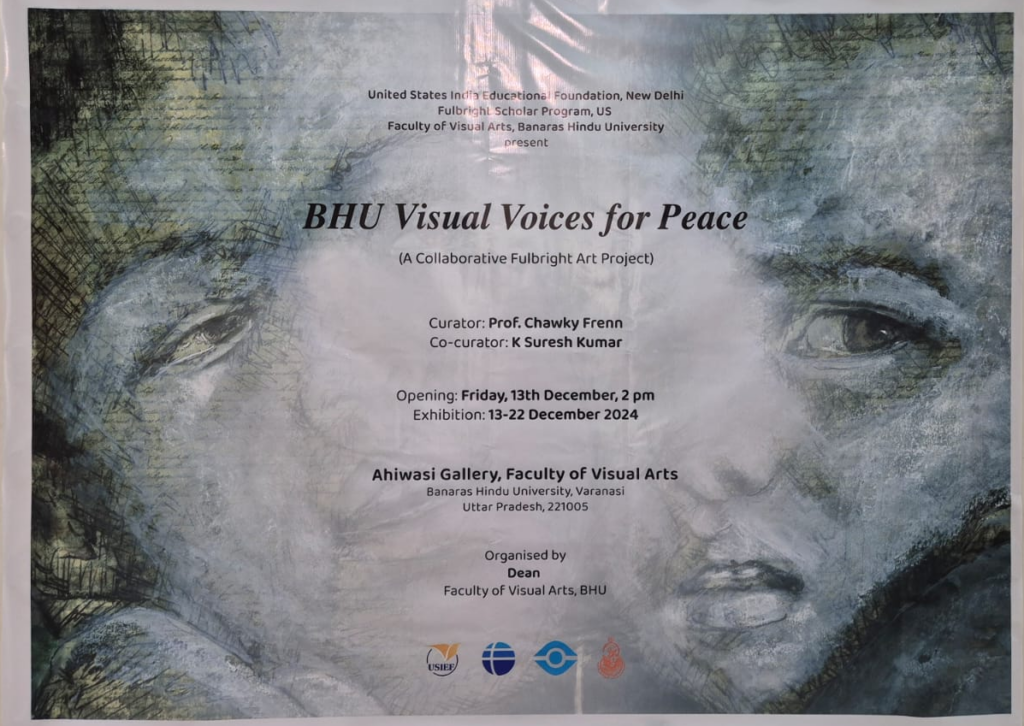
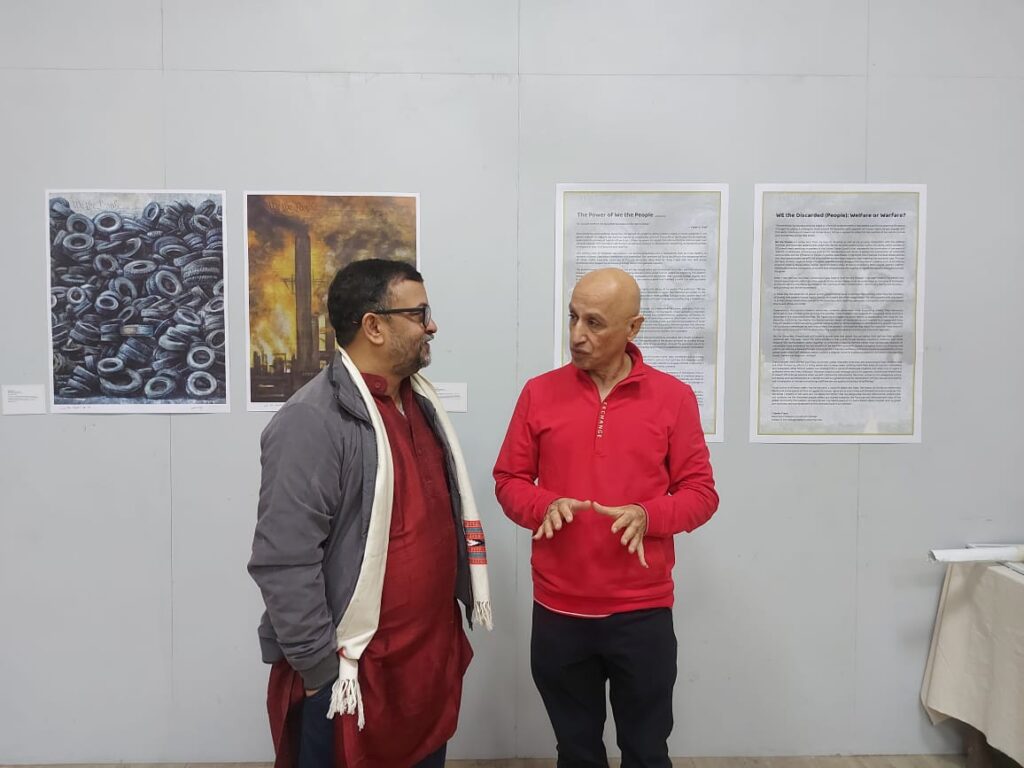
19 दिसंबर 2024 को मैंने श्री अजितेश राय के साथ भारत कला भवन में इस प्रदर्शनी का दौरा किया। इसके बाद बनारस हिंदू विश्वविद्यालय में “Visual Voices for Peace” प्रदर्शनी देखी, जो छात्रों की पाँच महीने की मेहनत का नतीजा थी। इस प्रदर्शनी ने कला के माध्यम से शांति और न्याय का संदेश जीवंत किया।


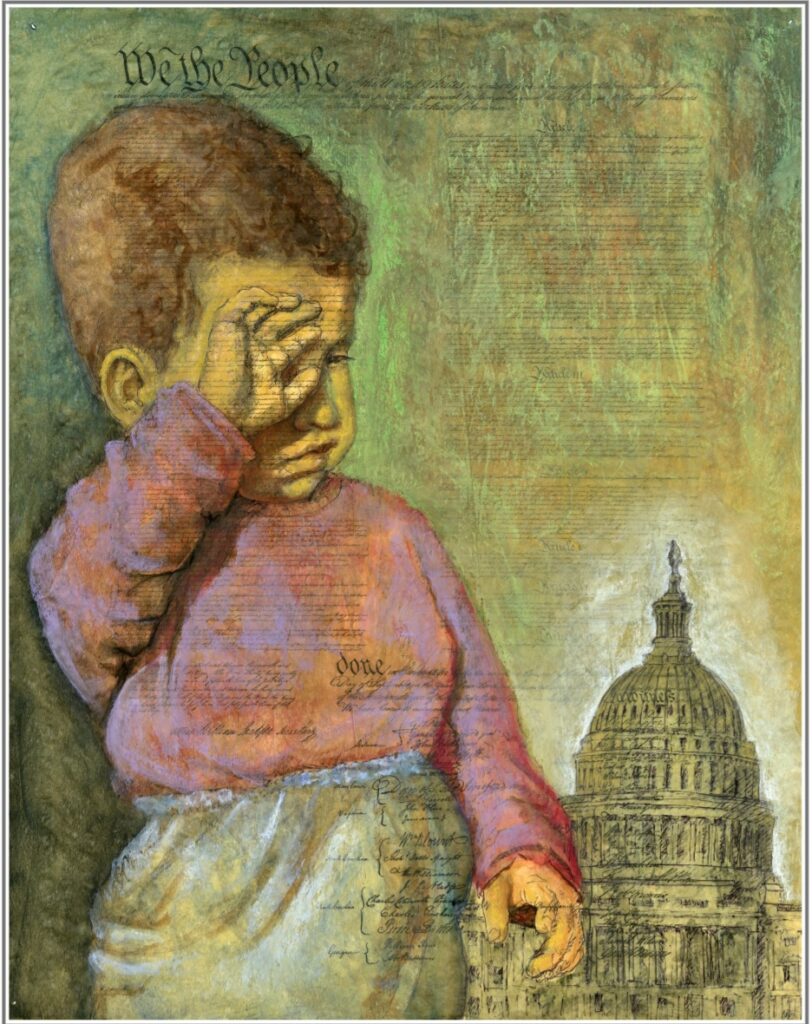
फ्रेण के कार्य केवल सतही कहानियाँ नहीं बताते; वे छिपे हुए आख्यानों को उजागर करते हैं — सत्ता, हिंसा, और दमन की उन परतों को, जो केवल कुछ लोगों को विशेषाधिकार देती हैं। उनके अनुसार, “हम भारत के लोग” और अमेरिकी संविधान के “We the People” के आदर्शों में समानता है, जो स्वतंत्रता, समानता, और बंधुत्व को व्यक्त करते हैं।

चावकी फ्रेण के अनुसार, कला केवल सौंदर्य का माध्यम नहीं है; यह समाज में बदलाव लाने का एक शक्तिशाली साधन है। उनकी पेंटिंग्स दर्शकों को केवल देखने के लिए आमंत्रित नहीं करतीं, बल्कि उन्हें सोचने और कार्य करने के लिए प्रेरित करती हैं।

फ्रेण के चित्र दिखाते हैं कि कैसे पूंजीवादी ताकतें लोकतंत्र को कमजोर कर रही हैं। उदाहरण के लिए, जब बड़े उद्योग अपनी योजनाओं के लिए जंगलों को काटते हैं या विस्थापन को अंजाम देते हैं, तब यह लोकतंत्र की मूल अवधारणा के विरुद्ध होता है। इसके अलावा, चुनावों में बड़े पैमाने पर धन का उपयोग लोकतांत्रिक प्रक्रिया को प्रभावित करता है।

फ्रेण के चित्र यह दिखाते हैं कि युद्ध किस प्रकार सत्ता और धन संचय का साधन बन गए हैं। उनके चित्र विस्थापन और युद्ध के दर्द को गहराई से महसूस कराते हैं।

फ्रेण की कला उन समुदायों की आवाज़ को उजागर करती है, जिन्हें समाज द्वारा त्याग दिया गया है। प्रवासी मजदूरों, विस्थापितों, और शरणार्थियों की पीड़ा उनकी पेंटिंग्स में झलकती है।

फ्रेण की प्रदर्शनी भारतीय संदर्भ में अत्यंत महत्वपूर्ण है। जाति व्यवस्था, धार्मिक भेदभाव, और आर्थिक असमानता जैसे मुद्दे भारतीय समाज को गहराई से प्रभावित करते हैं। उनकी कला हमें यह सोचने पर मजबूर करती है कि क्या हम वास्तव में एक न्यायपूर्ण और समतामूलक समाज की ओर बढ़ रहे हैं, या केवल खोखले आदर्शों का पालन कर रहे हैं।

“We the (Discarded) People” की प्रासंगिकता

चावकी फ्रेण के कार्य केवल अमेरिकी समाज तक सीमित नहीं हैं। उनकी कला वैश्विक मानवता की साझा समस्याओं — पूंजीवाद, युद्ध, और मानवाधिकारों की उपेक्षा — को उजागर करती है। उनकी प्रदर्शनी का उद्देश्य समाज में न्याय और शांति की स्थापना करना है।

फ्रेण के अनुसार, “We the People” केवल एक वाक्यांश नहीं है, बल्कि यह एक सार्वभौमिक मूल्य है, जो सभी देशों और समुदायों पर लागू होता है। उनकी पेंटिंग्स में यह दिखाया गया है कि कैसे शक्तिशाली लोग कमजोर समुदायों को हाशिये पर धकेलते हैं।

चावकी फ्रेण की प्रदर्शनी एक गहरी दृष्टि प्रदान करती है, जो मानवता के लिए न्याय और शांति की आवश्यकता पर बल देती है। उनकी कला हमें यह याद दिलाती है कि कला केवल मनोरंजन नहीं, बल्कि समाज में परिवर्तन लाने का एक सशक्त साधन हो सकती है।

चावकी फ्रेण की प्रदर्शनी “We the (Discarded) People” हमें यह सोचने पर मजबूर करती है कि क्या हम वास्तव में उस समाज की ओर बढ़ रहे हैं, जिसका सपना हमारे संविधान में देखा गया था। जब तक हम इन सवालों का सामना नहीं करते और उनके समाधान की दिशा में कार्य नहीं करते, तब तक समाज में वास्तविक बदलाव संभव नहीं है।


Friday, December 13, 2024

Dr. Lenin Raghuvanshi: A Voice for Peace and Justice in Turbulent Times


Dr. Lenin Raghuvanshi: A Voice for Peace and Justice in Turbulent Times

In a world often marred by division and conflict, Dr. Lenin Raghuvanshi stands as a beacon of hope and resilience. A celebrated human rights activist, Dr. Lenin is the founder of the People's Vigilance Committee on Human Rights (PVCHR), an organization headquartered in the historic city of Varanasi. Over the years, PVCHR has become synonymous with empowering marginalized communities and advocating for justice, equality, and human dignity.

Dr. Lenin’s extraordinary contributions to the field of human rights have earned him widespread recognition, including a nomination for the Nobel Peace Prize. His relentless efforts to bridge societal divides and foster understanding have made him a pivotal figure in India's human rights landscape.

A Unique Perspective on the Crisis

In this thought-provoking podcast episode, Dr. Lenin delves deep into the complexities of the present-day crisis affecting the valley and the city. Drawing from his experiences of working alongside Irom Sharmila in Manipur, he offers a unique perspective on the internal divisions that fuel unrest and hinder progress. His work in the conflict-ridden northeastern region of India has given him a profound understanding of the socio-political dynamics at play, and he skillfully connects these insights to the challenges faced by communities across the country today.

Establishing Peace: Dr. Lenin’s Vision

Dr. Lenin’s analysis goes beyond diagnosing the problem—he also provides actionable solutions for establishing peace and harmony between diverse groups. His approach emphasizes the importance of dialogue, mutual respect, and addressing the root causes of inequality and disenfranchisement. By advocating for inclusive development and grassroots empowerment, Dr. Lenin paints a hopeful picture of how communities can rebuild trust and work towards a shared future.

Listen to the Full Podcast

This podcast is a must-listen for anyone interested in understanding the deeper issues behind societal conflicts and discovering pathways to peace. Dr. Lenin’s expertise, coupled with his compassionate and pragmatic outlook, makes this conversation both insightful and inspiring.

🎧 Watch the full podcast here: https://www.youtube.com/watch?v=sxOh7Ujo46k

Join us as we explore the vision of a man who has dedicated his life to creating a just and equitable society. Through his work and words, Dr. Lenin Raghuvanshi reminds us that peace is not just an ideal—it is a collective responsibility and a tangible goal we can achieve together.


About Dr. Lenin Raghuvanshi
Dr. Lenin is an advocate for marginalized communities, an anti-caste crusader, and a staunch supporter of women's and children's rights. His journey, shaped by tireless activism and deep empathy, continues to inspire countless individuals around the globe. Through PVCHR and his partnerships with changemakers like Irom Sharmila, he has demonstrated that meaningful change begins at the grassroots and requires unwavering commitment.